

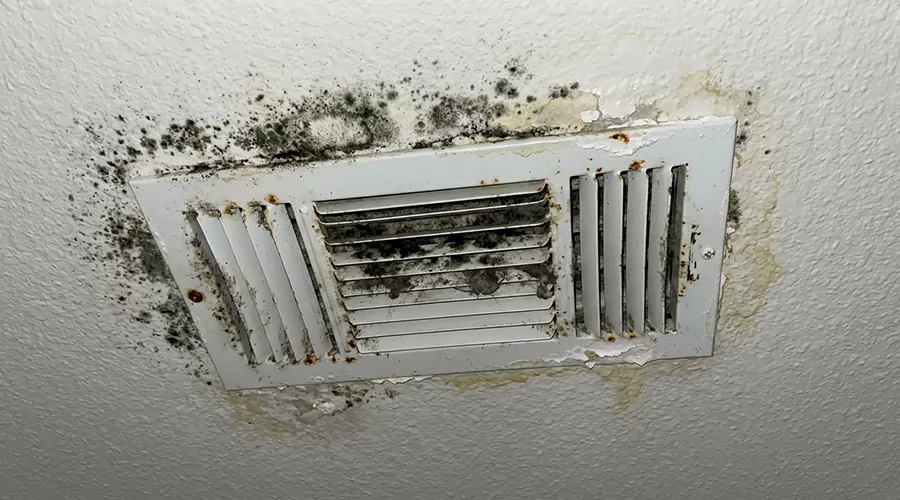
If you suspect mold in apartment vents, document the affected areas and report the problem to property management as soon as possible. Avoid disturbing the material or spraying chemicals into the ventilation system. The first priority is identifying moisture because mold can begin growing on damp materials within 24 to 48 hours under suitable conditions.
Apartment mold problems require a slightly different approach from those in owner-occupied homes. Renters may be able to clean ordinary dust from accessible vent covers, but internal ductwork and shared building equipment usually fall outside normal household maintenance. The property's ventilation design also determines which components serve individual apartments.
Visible black staining does not automatically mean that mold is present. Dust and soot can create similar deposits around vent openings. However, repeated moisture or suspected growth inside the ventilation system deserves attention because cleaning the visible surface may not resolve the underlying problem.
What Should You Do First if You Find Mold in Apartment Vents?
The first step is to document the suspected contamination without disturbing it. Check whether the area is damp and identify any visible water damage around the opening. Reporting the condition promptly gives property management an opportunity to investigate the moisture source before additional materials become affected.
Document the Visible Problem
Take clear photographs of the affected vent and its surrounding surfaces before attempting any cleaning. Capture both a close view of the deposit and a wider image showing the vent's location in the room. This makes it easier to demonstrate the extent of the problem.
Record when you first noticed the discoloration and whether it has changed over time. Include any recurring condensation or water stains in your notes. These details can help distinguish a recent moisture problem from ordinary dust buildup.
Avoid Disturbing Suspected Growth
Do not scrape or brush suspected mold inside a vent opening. Disturbing contaminated material may release particles into the surrounding air. Household vacuum cleaners are also not appropriate for removing substantial suspected mold deposits from internal ductwork.
Avoid spraying bleach or other disinfectants into the vents. These products may contact materials that cannot be safely rinsed or dried. Chemical treatment also does not correct the underlying moisture conditions that allow mold to develop.
Report the Problem to Apartment Management
Notify the property manager or maintenance department through the apartment's established reporting process. Written communication is useful because it creates a record of when the concern was raised. Include photographs and explain whether the problem involves visible growth or recurring moisture.
Describe the symptoms rather than assuming the entire ventilation system contains mold. For example, explain that dark patches are developing around a damp bedroom vent or that water droplets repeatedly form along a ceiling grille. Specific observations help maintenance staff determine what needs investigation.
Check for Immediate Moisture Problems
Look for active water dripping around the vent or spreading across nearby drywall. If a leak is present, report it using the property's urgent maintenance procedure. Water intrusion may continue damaging concealed materials while the issue remains unresolved.
If the HVAC system itself is known or credibly suspected to contain mold, stop operating an independently controlled unit until it can be assessed. When the ventilation system is shared or cannot be controlled safely, contact building management promptly for instructions. Avoid altering shared equipment or electrical controls without authorization.
Why Does Mold Develop Around Apartment Air Vents?
Mold around apartment vents develops when moisture remains on surfaces that can support fungal growth. Condensation from cold supply air is one possible cause, but plumbing leaks and building ventilation problems can also contribute. Identifying the moisture source determines whether the issue involves the vent cover or surrounding building materials. Our apartment air duct cleaning services address contamination in multi-unit buildings.
Condensation From Air Conditioning
Cold supply grilles can develop condensation when humid room air contacts their surfaces. Water may collect around the opening and spread onto nearby paint or drywall. Repeated dampness can support mold growth when dust or other nutrients are present.
This problem may become more noticeable during humid weather or periods of frequent cooling. However, one damp vent does not prove that all the apartment's ducts are contaminated. Local insulation conditions and airflow patterns can make a single opening more vulnerable.
Poor Bathroom Ventilation
Bathrooms produce significant moisture during showers and other daily activities. When humid air is not removed effectively, moisture can collect on cooler surfaces throughout the room. Vent covers and nearby ceilings may become damp under these conditions.
A bathroom exhaust fan is different from the central heating and cooling system. Its purpose is to remove humid air rather than supply conditioned air. A dirty exhaust grille or poorly functioning fan should therefore be evaluated as part of the bathroom ventilation system.
Plumbing or Roof Leaks
Apartment buildings contain concealed pipes that may run above ceilings or behind walls. A plumbing leak can wet building materials near a ventilation opening and create visible staining around the grille. Roof leaks can produce similar symptoms in upper-floor apartments.
The location of the stain does not always reveal the exact source of the water. Moisture may travel along framing or duct surfaces before appearing in the occupied room. Repairing the original leak is necessary before affected materials can be dried and restored.
Damaged Duct Insulation
Some apartment ducts pass through ceiling cavities or other areas with significant temperature differences. Insulation helps reduce unwanted condensation around cold duct surfaces. When insulation is damaged or incomplete, humid air may reach surfaces that become wet during cooling.
The resulting moisture can affect nearby drywall or internal duct materials. These components may not be accessible from inside the apartment. This is one reason recurring condensation should be investigated rather than treated only as a surface cleaning issue.
Moisture Problems in Shared Building Systems
Some apartments use central ventilation or heating equipment maintained at the building level. Moisture problems involving shared components may affect more than one unit, depending on the system design. However, a shared HVAC system does not automatically mean every apartment exchanges air through the same ducts.
Building ventilation arrangements vary considerably. Some units have completely separate heating and cooling systems, while others share certain mechanical components. Identifying the affected equipment is necessary before determining the scope of the problem.
How Can You Tell Mold From Ordinary Dust in Apartment Vents?
Dark deposits around apartment vents are not always mold. Airborne dust can collect along grille openings and create staining that resembles fungal growth. Moisture-related contamination becomes more concerning when the surface remains damp or surrounding building materials show signs of deterioration.
A thin dry coating across a return grille commonly reflects normal dust collection. Irregular discoloration on damp drywall may suggest a different problem. However, appearance alone cannot reliably identify mold or determine whether contamination extends inside the duct system.
| Observation | Possible Cause | Recommended First Action |
|---|---|---|
| Dry gray dust across grille | Ordinary household particles | Clean accessible surface if permitted |
| Dark streaks around vent edges | Airflow-related particle staining | Check for moisture and recurring deposits |
| Water droplets on supply grille | Condensation | Record humidity and report repeated dampness |
| Irregular patches on wet drywall | Possible mold growth | Photograph and report promptly |
| Yellow or brown ceiling stain | Water intrusion | Request investigation of the leak |
| Musty odor during HVAC operation | Possible moisture contamination | Document when the odor occurs |
| Visible material inside a damp duct | Possible internal contamination | Avoid disturbance and request assessment |
The presence of moisture provides a stronger reason for concern than color alone. A dark stain that remains completely dry may result from particles collecting along an airflow path. A wet patch accompanied by damaged paint suggests an active or recent moisture problem.
Do not rely on inexpensive household test kits as the only basis for deciding whether the apartment has a serious contamination problem. Mold spores are naturally present in indoor air, and a positive result does not necessarily identify where active growth exists.
How Serious Is Mold Around an Apartment Vent?
The seriousness of suspected mold depends on the amount of affected material and whether moisture continues entering the area. An isolated spot on a washable exterior grille is different from contamination extending into drywall or internal duct insulation. The presence of recurring water damage is particularly important because concealed materials may remain wet.
Mold exposure can cause allergic reactions or respiratory symptoms in some people. Individuals with asthma or other sensitivities may experience stronger reactions. However, symptoms alone cannot establish that a particular air vent is the source of exposure.
Visible mold growth should be addressed even when no one in the apartment reports symptoms. The goal is to remove established contamination and correct the moisture source rather than wait for a health concern to develop.
For tenants, the most useful action is to document the condition and obtain an appropriate assessment of affected building components. The extent of damage should determine the response rather than the color of the deposit alone.
How Quickly Can Apartment Vent Mold Become a Bigger Problem?
Mold may begin developing on damp materials within 24 to 48 hours under suitable conditions. However, the rate of visible growth depends on the surface and duration of water exposure. A briefly damp metal grille behaves differently from drywall that remains wet because of an unresolved plumbing leak.
Continuing moisture can affect materials behind a vent even when the visible staining appears small. The resulting damage may extend beyond the cover and involve concealed insulation. This is why reporting recurring condensation early is preferable to waiting until the affected area becomes larger.
| Condition | Possible Development | Recommended Tenant Action |
|---|---|---|
| Light dry staining | Dust or other surface deposits | Document and clean if appropriate |
| Repeated condensation | Persistent surface moisture | Report the recurring condition |
| Dampness lasting 24 to 48 hours | Mold growth becomes possible | Request prompt moisture correction |
| Damaged paint or drywall | Moisture may have affected porous material | Report visible deterioration |
| Suspected growth inside ventilation system | Possible internal contamination | Request system assessment |
| Recurring damage after repairs | Original source may remain unresolved | Document and follow up in writing |
These conditions do not necessarily occur in a predictable sequence. A small leak can remain hidden for a long period before staining becomes visible. The most useful approach is to act when recurring moisture is first identified.
Can You Clean Mold Around Apartment Vents Yourself?
Renters can often clean ordinary dust from accessible vent covers, but suspected mold requires additional care. A small isolated spot on a washable exterior surface may be manageable under suitable conditions. However, contamination inside the HVAC system or involving damaged building materials should not be treated as normal housekeeping.
For general household mold, EPA guidance indicates that areas smaller than approximately 10 square feet can often be cleaned by homeowners when conditions are appropriate. This guideline does not mean renters should independently clean concealed duct contamination or remove building materials. Lease terms may also limit which components tenants are allowed to alter.
If the material appears limited to ordinary dry dust, a soft vacuum attachment or damp cloth may be appropriate for routine cleaning. However, if visible growth is suspected, document it first and follow the property's reporting procedure. Do not remove internal duct insulation or dismantle equipment to investigate the problem.
People with significant mold allergies or weakened immune systems should avoid mold cleanup. Even for a small washable surface, the original moisture problem must be corrected before cleaning can provide lasting results.
How Should You Report Mold in Apartment Vents?
A maintenance report should identify the exact location of the problem and describe the visible symptoms. Clear documentation helps distinguish a moisture concern from an ordinary cleaning request. It also creates a record of when the property was notified.
Include the following information:
- Affected location: Identify the room and whether the problem involves a ceiling or wall vent.
- Date discovered: Record when the staining or moisture first became visible.
- Description: Explain whether there is discoloration or recurring water damage.
- Photographs: Attach clear images showing the affected opening and nearby surfaces.
- HVAC conditions: Note whether the problem appears during cooling or heating.
- Previous reports: Mention earlier maintenance requests involving the same location.
- Requested action: Ask for investigation of the moisture source and affected ventilation components.
Keep the description factual and avoid making claims that have not been confirmed. A report explaining that dark patches appear around a damp vent is more useful than stating that the entire apartment contains toxic mold without supporting evidence.
Use the apartment's official maintenance portal or another accepted written method whenever possible. Save the submission confirmation and any responses. If the issue continues after maintenance work, take new photographs showing the recurring condition.
What if Apartment Maintenance Only Cleans or Paints Over the Mold?
Cleaning visible stains may improve the appearance of a vent, but it does not solve a continuing moisture problem. Painting over suspected active growth is not an appropriate substitute for removal and drying. If condensation or a leak remains, the same area may become damaged again.
After maintenance work, monitor whether the surface stays dry during normal HVAC operation. Document any new water droplets or recurring discoloration. If the problem returns, explain that the original symptoms continue despite the previous visit.
A useful follow-up request asks whether the moisture source was identified and corrected. This is more specific than requesting another cosmetic cleaning. The answer may help determine whether the issue involves duct insulation or another building component.
If a persistent water problem is not addressed, local housing or health authorities may provide guidance about the available complaint process. The appropriate agency depends on the apartment's location and the applicable housing rules.
What Are Landlords Responsible for When Mold Appears in Vents?
Responsibility for apartment mold problems depends on the lease and the housing laws that apply in the property's location. Landlords commonly control permanent building systems and concealed HVAC components, while tenants may be responsible for ordinary household cleaning. However, the exact legal obligations cannot be determined without knowing the jurisdiction.
The cause of the moisture problem also matters. A roof leak or damaged building ventilation component may require work that the tenant cannot perform. A dusty removable grille may instead fall within normal housekeeping responsibilities.
| Problem | Likely Maintenance Category | Important Consideration |
|---|---|---|
| Ordinary dust on vent cover | Routine housekeeping | Follow lease and property instructions |
| Dirty accessible filter | Routine HVAC maintenance | Responsibility depends on lease |
| Persistent condensation | Building or HVAC moisture issue | Requires source investigation |
| Leaking concealed plumbing | Building repair | Prompt maintenance report |
| Moldy internal duct insulation | HVAC component remediation | Requires controlled access |
| Recurring mold after cosmetic repair | Unresolved moisture problem | Follow up with documentation |
Tenants should not automatically assume that they must pay for specialized duct cleaning or mold remediation. Similarly, a property owner is not necessarily responsible for every ordinary surface cleaning task. The lease and local housing requirements determine how responsibility is assigned.
Before paying for independent work on permanent building components, review the rental agreement and obtain appropriate authorization. Unauthorized removal or alteration of HVAC equipment may create additional complications.
Should You Move Out if You Find Mold in Apartment Vents?
Finding a dark stain around one vent does not automatically mean the apartment is unsafe to occupy. The appropriate response depends on whether actual mold is present and how much of the building is affected. Ongoing water damage and confirmed extensive contamination require more attention than a small isolated surface deposit.
If you experience symptoms that you believe are related to mold exposure, seek medical advice. Individuals with significant respiratory conditions or compromised immunity may need additional precautions while the environment is being assessed.
Decisions about temporarily leaving an apartment should consider the severity of contamination and the available living conditions. Legal rights involving relocation or lease termination depend on the state and local housing rules. A tenant should avoid assuming that any mold discovery automatically creates a right to end the lease.
Keep documentation of serious conditions and maintenance responses. This information can help establish the sequence of events if the problem requires additional housing assistance.
When Should Apartment Maintenance or a Professional Step In?
Property maintenance should investigate suspected mold inside ductwork and recurring moisture around ventilation openings. Contamination involving internal insulation or concealed building materials cannot usually be resolved through ordinary tenant cleaning. An appropriate assessment should determine which components are affected and why moisture is accumulating.
A qualified HVAC technician may inspect condensate drainage and check for damaged duct connections. The assessment can also identify whether a ceiling grille is developing condensation because of insulation problems. If contamination extends into porous materials, specialized remediation may be necessary.
Wet or moldy fiberglass duct insulation generally requires replacement rather than chemical spraying. Sound bare metal ducts may be cleaned when contamination is confirmed and the moisture source has been corrected. The method should match the actual material and extent of damage.
In 2026, reported U.S. mold remediation costs commonly range from approximately $1,223 to $3,757 for many residential projects. Extensive HVAC-related remediation can cost $3,000 to $10,000. These are broad project benchmarks rather than a standard cost for one apartment vent, and they do not determine who must pay.
How Can You Prevent Mold Around Apartment Vents?
Preventing mold in apartment ventilation areas depends on reducing moisture and maintaining normal airflow. Tenants can control some indoor conditions through routine activities, while building-related leaks and equipment defects require maintenance attention. Consistent monitoring makes recurring problems easier to identify.
Monitor Indoor Humidity
Use a digital hygrometer to measure relative humidity and aim for approximately 30% to 50% when practical. Indoor humidity can increase during showers or other moisture-producing activities. If the apartment remains unusually humid despite normal cooling operation, report the condition so the ventilation system can be evaluated.
Use Bathroom and Kitchen Ventilation
Operate bathroom exhaust fans during showers and leave them running long enough to remove excess moisture when permitted by the system instructions. Use kitchen ventilation during cooking activities that produce steam. These measures help reduce moisture accumulating on cold surfaces.
Keep HVAC Openings Clear
Avoid placing furniture directly against return grilles or covering supply vents with rugs. Clear openings allow the system to distribute air according to its design. Do not install extra filter material over a vent unless the equipment is intended for that arrangement because additional restrictions can affect airflow.
Report Leaks Promptly
Notify property management when water stains or condensation repeatedly develop around vents. Photograph affected surfaces before damage spreads and keep a record of the report. Prompt action matters because damp building materials can begin supporting mold growth within 24 to 48 hours under suitable conditions.
Follow Apartment Maintenance Instructions
Check the lease or property handbook for filter replacement responsibilities and permitted cleaning tasks. Inspect accessible filters when tenants are expected to maintain them, but avoid opening shared mechanical equipment. Regular housekeeping can reduce dust buildup, while building maintenance must address problems involving permanent components when required by the applicable agreement and law.
Conclusion
Suspected mold in apartment vents should be documented and reported before disturbing the material. Condensation and water leaks are common underlying causes, while ordinary dust can resemble mold. Renters can manage routine surface cleaning but should not dismantle concealed HVAC components. Persistent moisture may require professional assessment and building repairs. This week, photograph any affected vents and submit a clear maintenance request.